No Pain, No Gain: Get In the Zone
This isn’t a commercial for AutoZone. Neither is it a post just about bicycling, but I’m going to start there.
While winding up a recent bike ride, I hit a hill that caused my legs to burn. When I’d experience that burning sensation in the past, I’d get temporarily discouraged about riding because the pain literally prevented me from achieving my distance or speed goals that I set for the day.
My attitude about that feeling, and the reflexive tendency to avoid future pain-inducing rides flipped 180 degrees when I read Younger Next Year
Some students shy away from the zone and stay with easy work. They avoid
embracing more difficult coursework because not knowing something is unnerving
and uncomfortable for them. They’ll choose the mainstream math class because
the advanced course is too painful.
by Chris
Crowley and Dr. Henry S. Lodge. In the book. the authors describe the benefits
of that muscle pain for developing strength and slowing down the aging process.
Reaching Our Limit
During normal
exercise, our body shunts oxygen to our muscles so they can continue to
perform. We breath harder so our bodies can produce this energy aerobically,
that is with oxygen. When we exceed a certain exercise threshold, our bodies no
longer can produce enough energy with oxygen to fuel our muscles, and so it
begins ananaerobic process of breaking down glucose, producing a
substance called lactate which allows energy production to continue. This
lactate, or lactic acid can accumulate for short periods of time (about 1-3
minutes), but in doing so, it creates that burning sensation that eventually
forces us to slow down, stop overworking our muscles and return to aerobic
energy production. In my case during my ride, though, it also caused me to
question whether or not I want to ride again!
Pushing Past Our
Temporary Limits
Here’s what I
learned. The more and the harder I ride—the more I pushed myself anaerobically
when my muscles were screaming—the higher that aerobic threshold goes. It’ll
take longer and require more strenuous activity to reach that anaerobic point,
enabling me to ride farther and faster over time. In other words, the last ride
of the season is not as painful as the first. The longer we stay in this
anaerobic zone—a zone of development—the stronger we get over time. The same is
true intellectually.
The Link Between
Exercise and Learning
In Brain
Rules, John Medina writes that regular exercise improves problem-solving
and memory because it sends the brain more oxygen and glucose. This brain food
stimulates a growth protein that keeps our existing brain cells firing, and
also encourages the growth of new cells in a region of
the brain associated with memory and learning. In short, exercise stimulates
learning.
The Zone of
Proximal Development
But there’s another
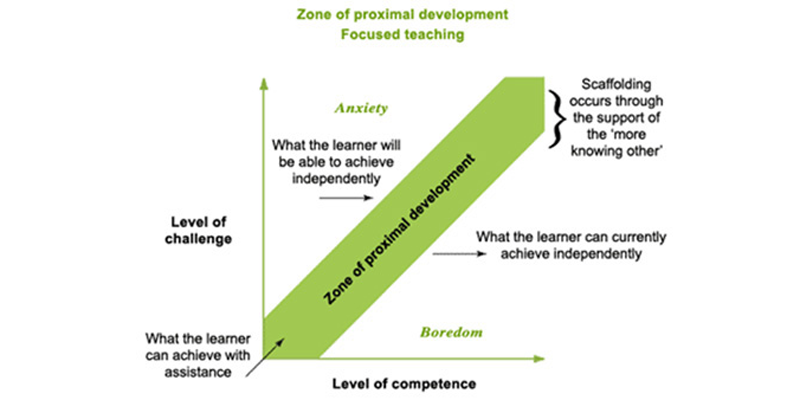
zone that more precisely links this example to learning. Lev Vygotsky
introduced an optimal level of rigor where a lesson is neither too hard nor too
easy. He called it [ii]the zone
of proximal development. It is a level of proximal difficulty between
where a student would be neither bored (because it’s too easy) nor frustrated
(because the work is too difficult). You know when you’re in the zone when you
require some assistance by a professor or in study groups to understand the
material, but you’re yet to do the work independently. Like the aerobic
threshold, you experience some stress of not knowing the material, particularly
if you’re used to “getting it” right away.
The Zone Moves
Up Because You Get Smarter
The great news is
that the zone moves up linearly with effort and practice. Over time, like the
physical threshold, the “intellectual burning sensation” will subside at the
same level of challenge because you’ll have mastered the work once you put in
the effort. To keep learning, you have to embrace increasingly challenging work
through deliberate practice otherwise it would get too easy (see my post about
How to Become an Expert:http://karlwreid.com/2013/06/).
You get smarter faster the longer you stay in the zone.
Avoiding the Zone
will Hurt You
Some students shy
away from the zone and stay with easy work. They avoid embracing more difficult
coursework because not knowing something is unnerving and uncomfortable for
them. They’ll choose the mainstream math class because the advanced course is
too painful. They’ll avoid going to a certain college for fear of having to
work hard. These students will never get over the proverbial hill. They’re the
ones who show no growth in knowledge and skills in college as the researchers
found in Academically Adrift. If that’s you, I have one message for
you: No Pain, No Gain.
Like me, I hope you too make an attitude shift about strenuous exercise. Likewise, embrace your intellectual challenges. Not knowing something and requiring assistance is a means to an end (mastery), and not an indictment on your ability. As you get into the zone, you’ll get stronger and smarter. The adage is true: No Pain, No Gain!
Like me, I hope you too make an attitude shift about strenuous exercise. Likewise, embrace your intellectual challenges. Not knowing something and requiring assistance is a means to an end (mastery), and not an indictment on your ability. As you get into the zone, you’ll get stronger and smarter. The adage is true: No Pain, No Gain!
Culled from © National Society of Black Engineers(N.S.B.E) Newsletter
Don't jump out from the kitchen at the first smoke
Udoka Abanobi


Comments
Post a Comment